Your all-in-one expert for home, auto & property care.

A/C Repair
Everyday Maintenance > A/C Repair
A/C Repair
Automotive
A/C Repair
Houston heat makes a properly working vehicle air conditioner more than a luxury. If your A/C is blowing warm air, cooling only while driving, making unusual noises, or taking too long to cool the cabin, the system needs diagnosis before refrigerant or parts are added.
Our mobile automotive A/C services in Houston help identify air conditioning problems and restore comfortable cabin temperatures whenever the required repair can be completed safely on-site.
Automotive
Common Automotive A/C Problems
Contact us if you notice:
- Warm air from the vents
- A/C not cooling as well as before
- Cooling that comes and goes
- Weak airflow
- Strange noises when A/C is running
- Unpleasant odors from vents
- Compressor not engaging
- A/C performance changing while idling
- Refrigerant leaks

A/C System Diagnostics
Automotive air conditioning involves several components working together.
Diagnosis may include checking appropriate:
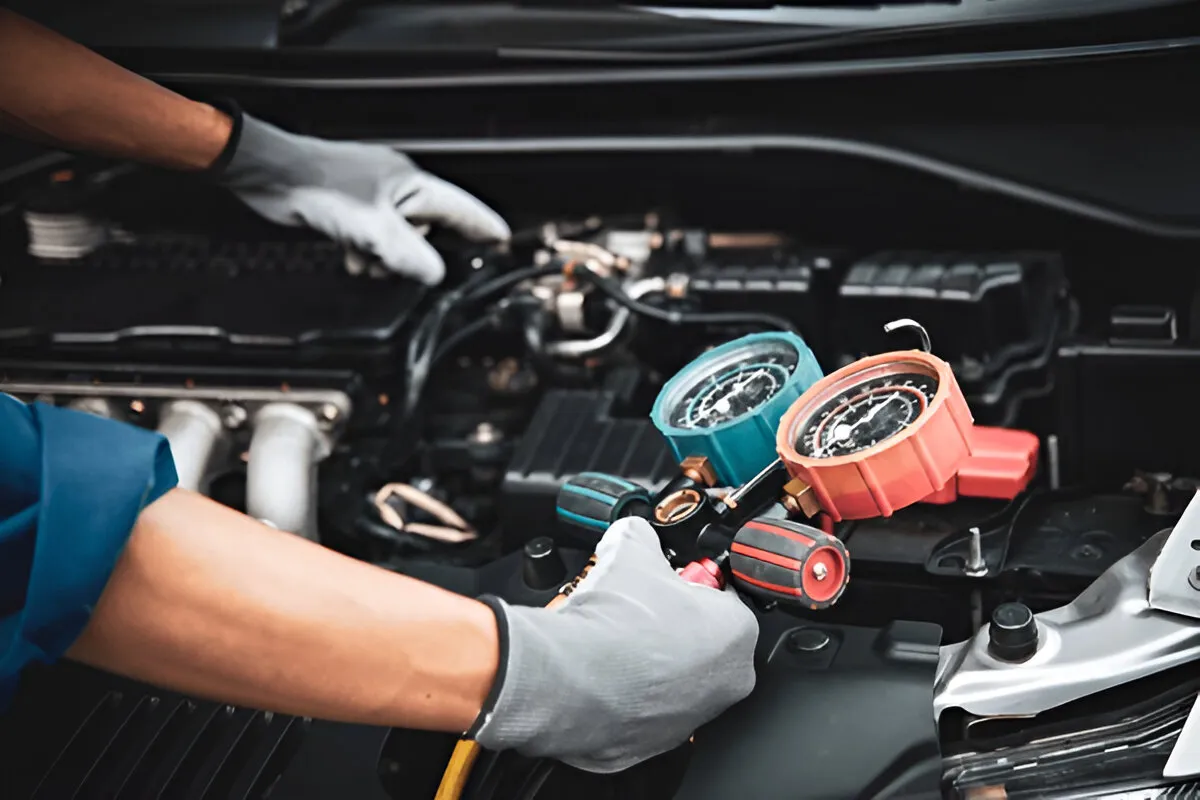
- Refrigerant pressures
- Compressor operation
- Condenser condition
- Cooling fans
- Electrical controls
- Visible leaks
- Vent temperature
- System performance
Refrigerant Service and Leak Testing
Low refrigerant is usually a sign that refrigerant has escaped somewhere in the system. Simply adding refrigerant without addressing a significant leak may only provide temporary relief. When appropriate, we inspect for leaks and evaluate the system before recommending recharge or repair.
A/C Compressor Service
The compressor circulates refrigerant through the air conditioning system.
Potential compressor-related symptoms include:
- No cooling
- Unusual noises
- Compressor not engaging
- Poor system pressure
We diagnose the system before recommending compressor replacement because other electrical or refrigerant-related issues can sometimes produce similar symptoms.
Condenser and Evaporator Concerns
The condenser releases heat from the refrigerant, while the evaporator absorbs heat from cabin air. Damage, restriction, leakage, airflow problems, or contamination in these areas may reduce cooling performance.
Performance Testing
After service, we check system operation and vent temperature when appropriate to confirm whether cooling performance has improved.